
An alternator listing can look correct while using a different electrical connector, pulley, mounting ear, regulator strategy, or output rating. Modern charging systems may vary voltage under computer control, so a low dashboard reading is not proof by itself that the alternator has failed.
Confirm the diagnosis and the exact unit before ordering. Battery condition, cable voltage drop, belt tension, a damaged pulley, blown fuse, poor ground, or control-system fault can imitate an alternator problem.
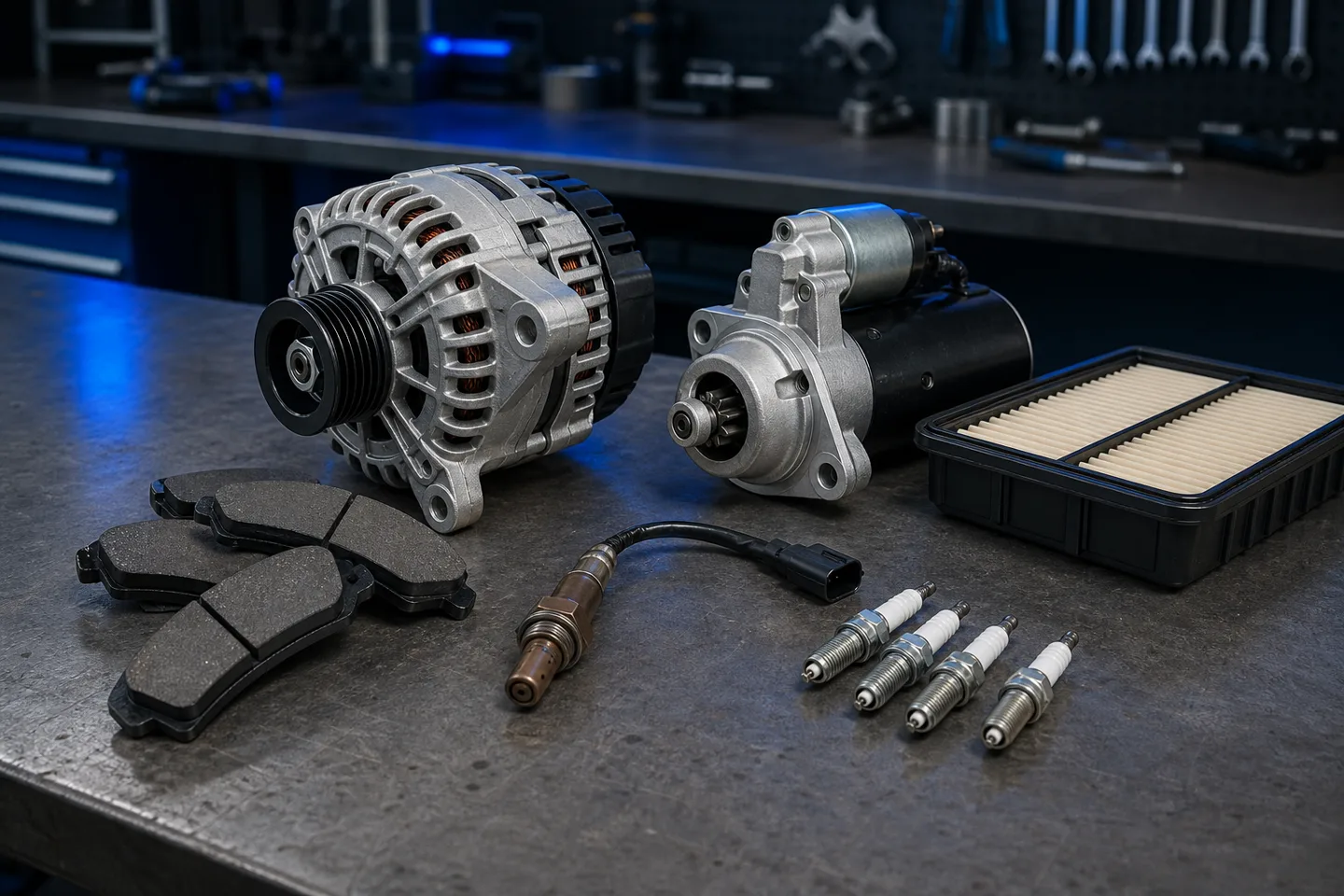
Confirm the electrical specification
Catalogs may list several amperage ratings for the same engine. Vehicles with heated accessories, premium audio, towing packages, stop-start systems, or fleet equipment can use a higher-output unit. Match the label or original equipment number whenever possible. Installing a lower-output alternator can leave the battery undercharged during high electrical demand.
More advertised amperage is not automatically an upgrade. The regulator communication, wiring capacity, fuse protection, belt drive, and computer calibration must support the unit. Treat a high-output conversion as a system modification, not a routine replacement.
Match the physical details
Compare mounting ears, case clocking, connector shape, terminal location, pulley diameter, groove count, and pulley type. Some vehicles use an overrunning alternator pulley that changes belt behavior. Replacing it with the wrong solid or clutch design can create belt noise, tensioner movement, or charging concerns.
Check what is included. A listing may show a pulley but exclude a terminal nut, protective cap, or mounting hardware. Never assume a generic product photo proves the connector orientation.
New versus remanufactured
A new alternator is built from new components, though the manufacturing source and quality controls vary. A remanufactured unit begins with a used core that is disassembled, cleaned, inspected, and rebuilt. The meaningful question is which wear items are replaced, how the rotor and stator are tested, whether the regulator and rectifier are load-tested, and how the final assembly is validated.
A low-cost remanufactured unit can be reasonable for an older vehicle with easy access. A stronger warranty or new unit may be worth more when replacement requires major disassembly. Read whether the warranty covers only the part and who pays return shipping.
Understand the core charge
Many rotating electrical parts carry a core deposit. You pay the deposit at purchase and receive it back after returning the original unit in acceptable condition within the stated deadline. The seller may reject a core with a broken case, missing major pieces, or a mismatched application.
For an online order, calculate outbound shipping, core deposit, return label cost, packaging, and the time before the refund. Do not discard the shipping box until the vehicle is repaired and the return instructions are confirmed.
Protect the replacement
A weak or internally damaged battery can overload a replacement alternator. Cable resistance, oil or coolant contamination, belt problems, and incorrect jump-starting can also shorten its life. Correct the cause of the failure and charge or replace the battery as required before relying on the new unit to recover it.
Some vehicles require battery monitoring reset, charging-system testing through a scan tool, or relearn procedures. Use service information for the specific vehicle, and have a qualified technician handle high-current connections if you are not equipped for the work.
Before you order
- Confirm diagnosis before removing the original unit.
- Match output rating, connector, mounting, and pulley design.
- Read the new or remanufactured testing and warranty details.
- Calculate the core deposit and return-shipping process.
- Test the battery and correct cable or belt problems.
Primary references
These public sources support the vehicle-identification, safety, warranty, or consumer-rights context used in this guide.