
Fitment basics
How to Confirm a Car Part Fits Before You Buy
A practical fitment checklist using the VIN, trim, engine, drivetrain, production date, and manufacturer part numbers.
Read guideCarPartsRadar field guides
Practical, independently written guidance for fitment, product quality, total cost, and safer purchasing decisions.
8 practical buying guides
Each guide separates diagnosis, fitment evidence, product comparison, and the costs that appear after the headline price.
Fitment basics
A practical fitment checklist using the VIN, trim, engine, drivetrain, production date, and manufacturer part numbers.
Read guideBuying strategy
Compare original equipment, aftermarket, remanufactured, and used parts by fit, warranty, cost, and repair risk.
Read guideBrake system
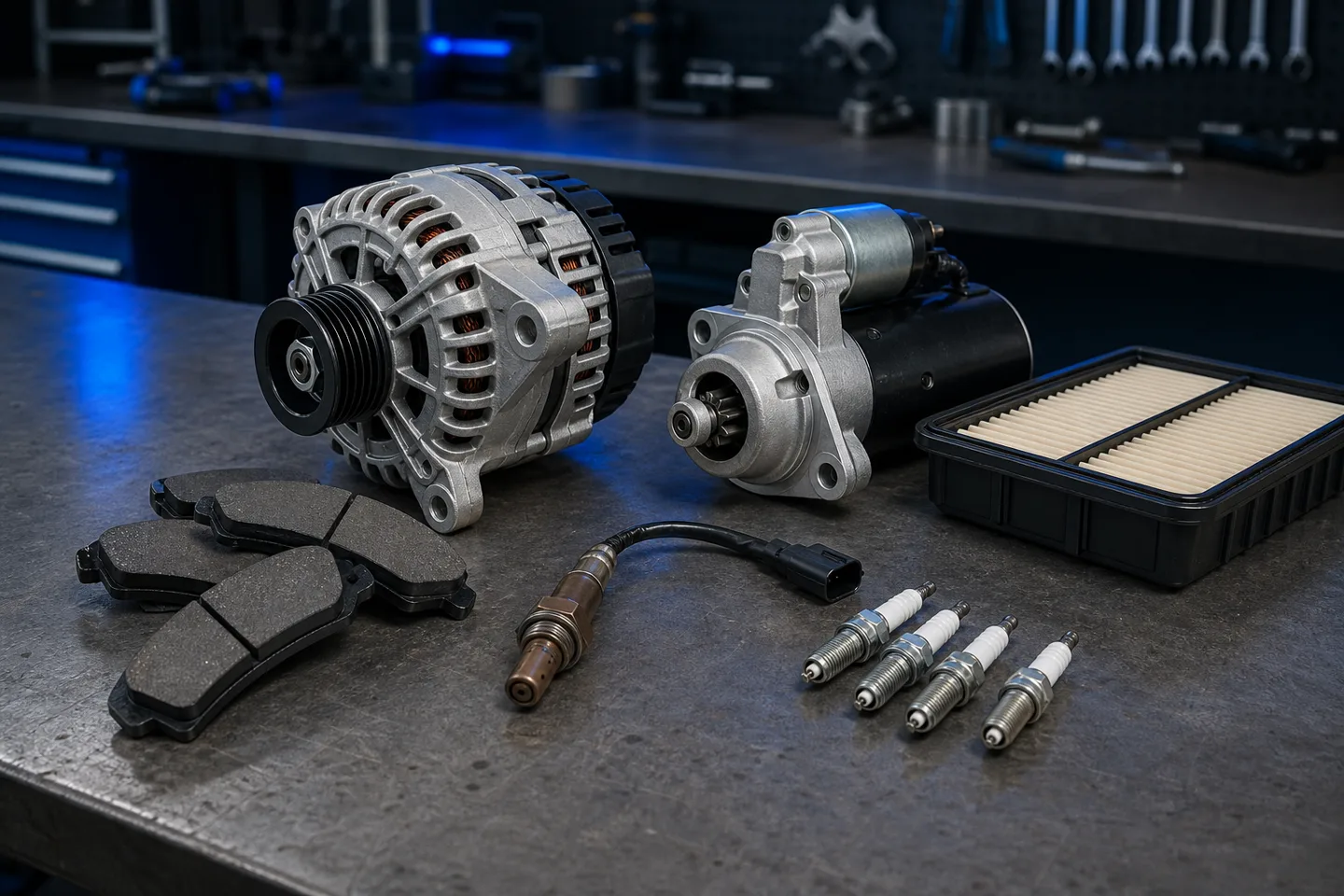
Choose replacement brake pads by axle, caliper package, friction material, hardware, driving conditions, and rotor condition.
Read guideStarting and charging
Compare alternators by rated output, connector, pulley, mounting, remanufacturing quality, warranty, and core-return cost.
Read guideStarting and charging
Select a starter by engine, transmission, tooth count, rotation, mounting, electrical terminals, warranty, and core policy.
Read guideEngine management
Identify the correct upstream or downstream oxygen sensor by bank, sensor number, emissions package, connector, and original part number.
Read guideSuspension
Understand shock and strut applications, complete assemblies, electronic suspension options, axle pairing, and alignment costs.
Read guideBuying strategy
Calculate delivered price, shipping, tax, core deposits, hardware, programming, returns, downtime, and warranty risk.
Read guideHow we publish
We do not call one brand or material universally best. Guides identify application details, tradeoffs, and reasons to pause before ordering.
Read our methodology