
Brake pads are sold for a specific axle and caliper design. The same vehicle can use different front or rear packages based on trim, wheel size, towing equipment, production date, or performance options. Before comparing compounds or prices, establish which brake package is actually installed.
Brakes are safety-critical. This guide supports product comparison, not diagnosis or installation. Unusual pedal feel, fluid loss, pulling, grinding, warning lights, or severe vibration should be evaluated before parts are ordered, and repair work should follow the vehicle service information.
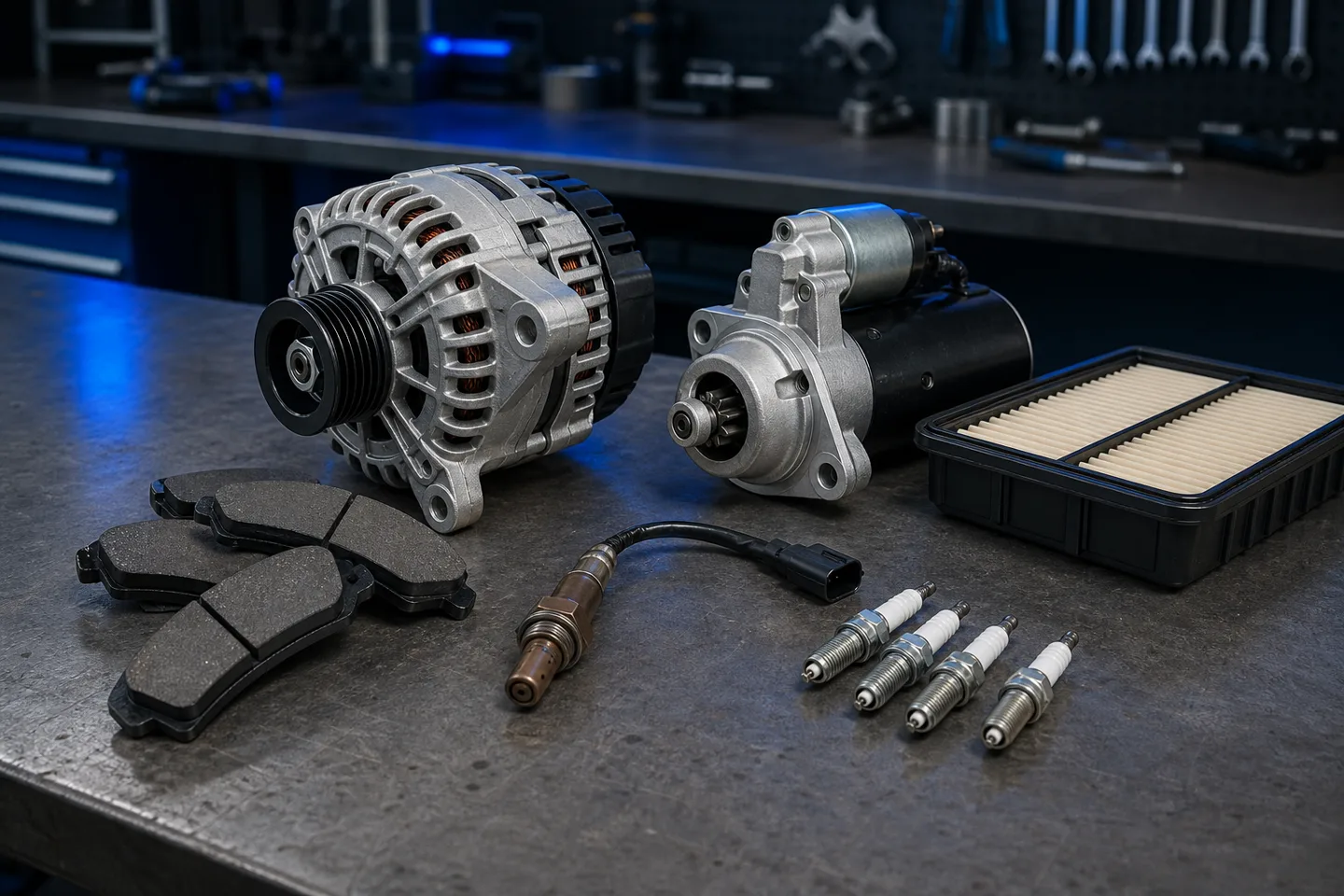
Identify the brake package first
Use the VIN, build date, option codes, and existing rotor diameter to resolve catalog choices. Count wear sensors and note whether they are built into the pad or sold separately. Compare the outline and retaining features of the old pad with the listing image, but do not rely on shape alone when multiple compounds share the same backing plate.
A pad set normally services both wheels on one axle. Front and rear sets are separate products. If a listing photo shows four friction pieces, that does not mean it covers all four wheels. Read the position and quantity fields carefully.
Understand common friction materials
Ceramic formulations are often selected for controlled noise and lighter-colored dust in normal street use. Semi-metallic formulations can offer strong heat tolerance and pedal response, but may create more visible dust or noise depending on the design. Organic and low-metallic formulations have their own tradeoffs. The label alone does not predict performance because each manufacturer tunes the complete formulation.
Match the product line to the vehicle weight, towing, hills, temperature range, and driving pattern. A commuter pad may not be suitable for repeated heavy loads. A track-oriented compound can perform poorly when cold and may be noisy on the street. Follow the pad manufacturer’s stated use rather than assuming a higher temperature rating is always better.
Hardware and wear sensors matter
Confirm whether the set includes abutment clips, shims, retaining springs, lubricant, and electronic wear sensors. Reusing corroded or distorted hardware can prevent smooth pad movement and create noise. Some vehicles require one sensor per axle while others use more than one, and a triggered sensor may not be reusable.
Look for application-specific instructions. Directional pads, inside and outside positions, adhesive shims, and electronic parking brakes can change the procedure. A complete box is valuable only when the included hardware matches the installed caliper.
Evaluate the rotors and calipers
New pads cannot correct a sticking caliper, damaged hose, loose wheel bearing, or rotor outside its service specification. Rotor thickness, runout, surface condition, heat checking, and corrosion should be inspected against service limits. Replacing pads against an unsuitable rotor can produce noise, vibration, uneven wear, or reduced performance.
When comparing a pad-only purchase with a pad-and-rotor kit, include the condition of the existing parts and the cost of repeat labor. A bundle is not automatically a better value if the components are an unknown product line or the kit omits required sensors and hardware.
Compare the complete purchase
Check axle position, quantity, warranty, shipping date, return rules, and whether opened or installed brake parts can be returned. Add hardware, sensors, rotors, cleaner, approved lubricant, and any single-use fasteners specified by the service procedure.
After installation, the friction manufacturer may specify a bedding or burnishing sequence. Follow the product and vehicle instructions in a safe location. If the pedal is not firm or the vehicle does not stop normally, do not continue driving.
Before you order
- Confirm axle position, caliper package, rotor size, and build date.
- Choose a friction line intended for the vehicle’s actual use.
- Check included shims, clips, springs, and wear sensors.
- Inspect rotor and caliper condition before finalizing the order.
- Follow the manufacturer’s installation and bedding information.
Primary references
These public sources support the vehicle-identification, safety, warranty, or consumer-rights context used in this guide.