
A listing that names your vehicle is a useful starting point, but it is not always enough to prove fitment. One model year can include several engines, transmissions, brake packages, body styles, and midyear production changes. The safest online purchase starts by identifying the exact configuration of the vehicle and then matching the part at more than one level.
This guide explains the evidence CarPartsRadar looks for when comparing listings. It also shows what a shopper should verify before ordering. No automated catalog can replace the label on the old part, the vehicle manufacturer catalog, or an experienced parts professional when the application is ambiguous.
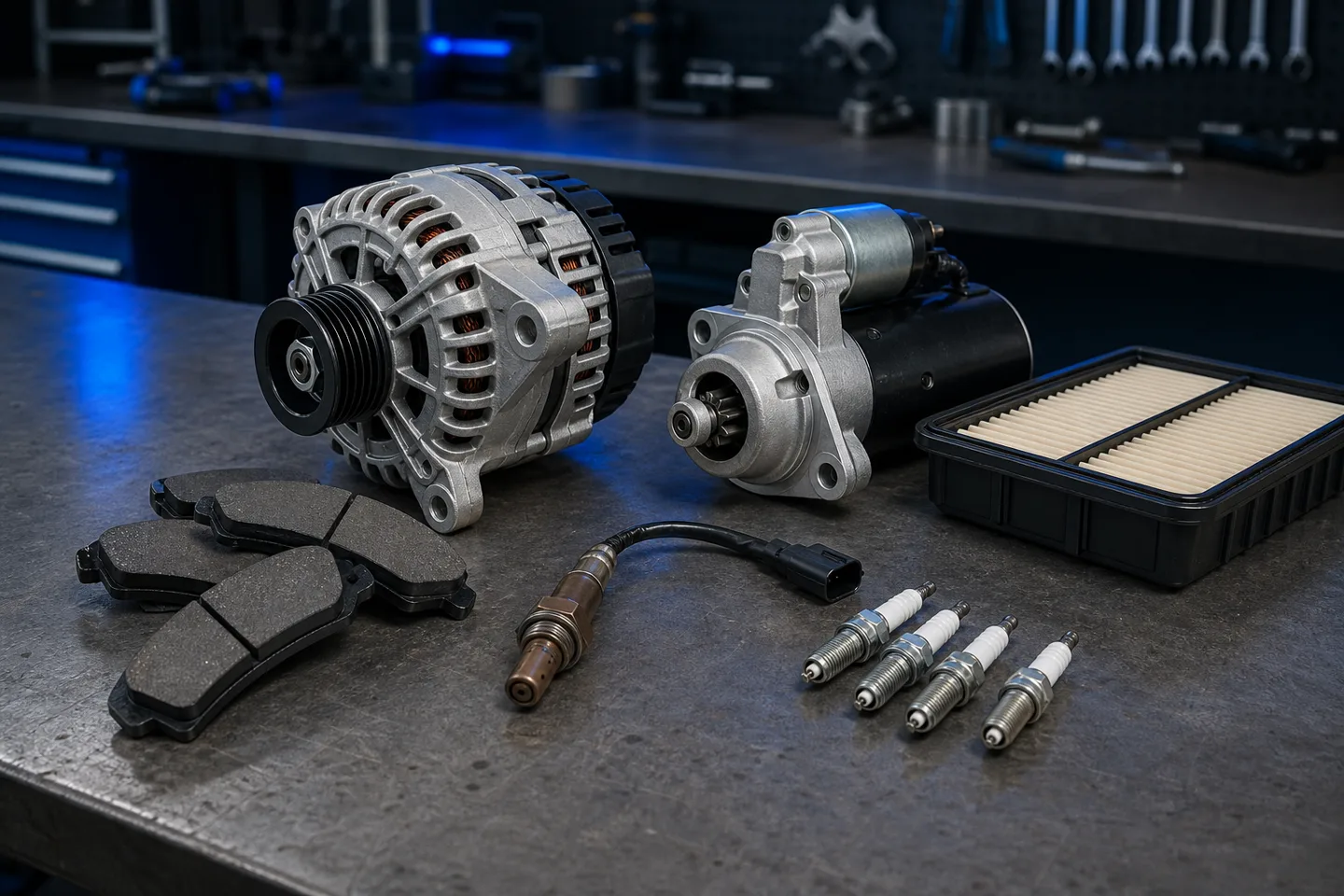
Begin with the vehicle identity
Write down the year, make, model, trim, engine displacement, cylinder count, fuel type, transmission, drivetrain, and body style. A 2018 pickup with rear-wheel drive may use a different hub, driveshaft, or suspension component than the four-wheel-drive version. A sedan and hatchback sold under the same model name can also have different exhaust or body hardware.
The VIN is the strongest starting point because it identifies a specific vehicle. NHTSA provides a public decoder, and manufacturer or dealer catalogs can often use the VIN to resolve option packages that a generic year-make-model selector cannot. VIN data is still not a universal part-number catalog, so keep the vehicle label and the old component available for a second check.
Look for production splits and option codes
Catalog notes such as “built before 03/18,” “with heavy-duty brakes,” or “without sport suspension” are not minor details. They describe a production split. The build month is usually printed on the certification label inside the driver door opening. Option codes may appear on a glove-box, trunk, spare-tire, or door label, depending on the manufacturer.
Brake rotor diameter, electrical connector shape, sensor count, axle ratio, wheel size, and emissions certification can all create fitment splits. When a listing includes one of these qualifiers, verify it directly. Do not infer a package from exterior appearance alone.
Use part numbers as a second match
If the old part has a readable number, compare it with the original equipment number in the listing or manufacturer catalog. Replacement brands often publish an interchange list that maps their number to several original numbers. Exact punctuation can vary, but the full base number and suffix matter when a manufacturer revised the component.
A matching number is especially useful for electronic modules, sensors, switches, pumps, and assemblies with similar housings. Appearance alone is weak evidence. Two components can share a casting while using different calibration, connector pinout, pulley, gear ratio, or internal specification.
Inspect the listing evidence
Read the complete title, compatibility notes, condition description, included-parts list, warranty, and return policy. Confirm whether a photo shows the actual item or a representative image. Check that mounting points, connector count, terminal orientation, hose locations, and dimensions agree with the old component.
For used parts, ask for the donor vehicle VIN and mileage when those details affect compatibility or remaining life. For remanufactured parts, review the core-return requirements before ordering. A low purchase price can become expensive if the seller requires return shipping on a heavy core.
Know when to stop and ask
Pause the purchase when the listing conflicts with the manufacturer catalog, the old part has a different connector, or the application depends on an option you cannot identify. Send the seller the VIN and the number from the original component. A precise question gives the seller a better chance to confirm the application in writing.
Safety-critical systems deserve extra caution. Brake, steering, restraint, and high-voltage components should be selected and installed with appropriate service information and training. If a wrong part could affect control of the vehicle, ask a qualified technician or parts department to confirm it before purchase.
Before you order
- Decode the VIN and record the complete vehicle configuration.
- Check the build date and any option-code requirement.
- Compare the old part number with the listing interchange.
- Match connectors, mounting points, dimensions, and included hardware.
- Read the warranty, return window, restocking fee, and core policy.
- Save the listing and written fitment confirmation with the receipt.
Primary references
These public sources support the vehicle-identification, safety, warranty, or consumer-rights context used in this guide.