
“OEM” and “aftermarket” describe who supplied a part, not whether every example is automatically good or bad. An original equipment part can offer the simplest path to the factory specification. A reputable aftermarket part can match that specification, solve a known weakness, or cost less. The right choice depends on the component, the vehicle, and the consequences of doing the repair twice.
A useful comparison goes beyond the price printed on the listing. Fitment confidence, included hardware, warranty labor, return shipping, expected service life, and the difficulty of installation all affect value.
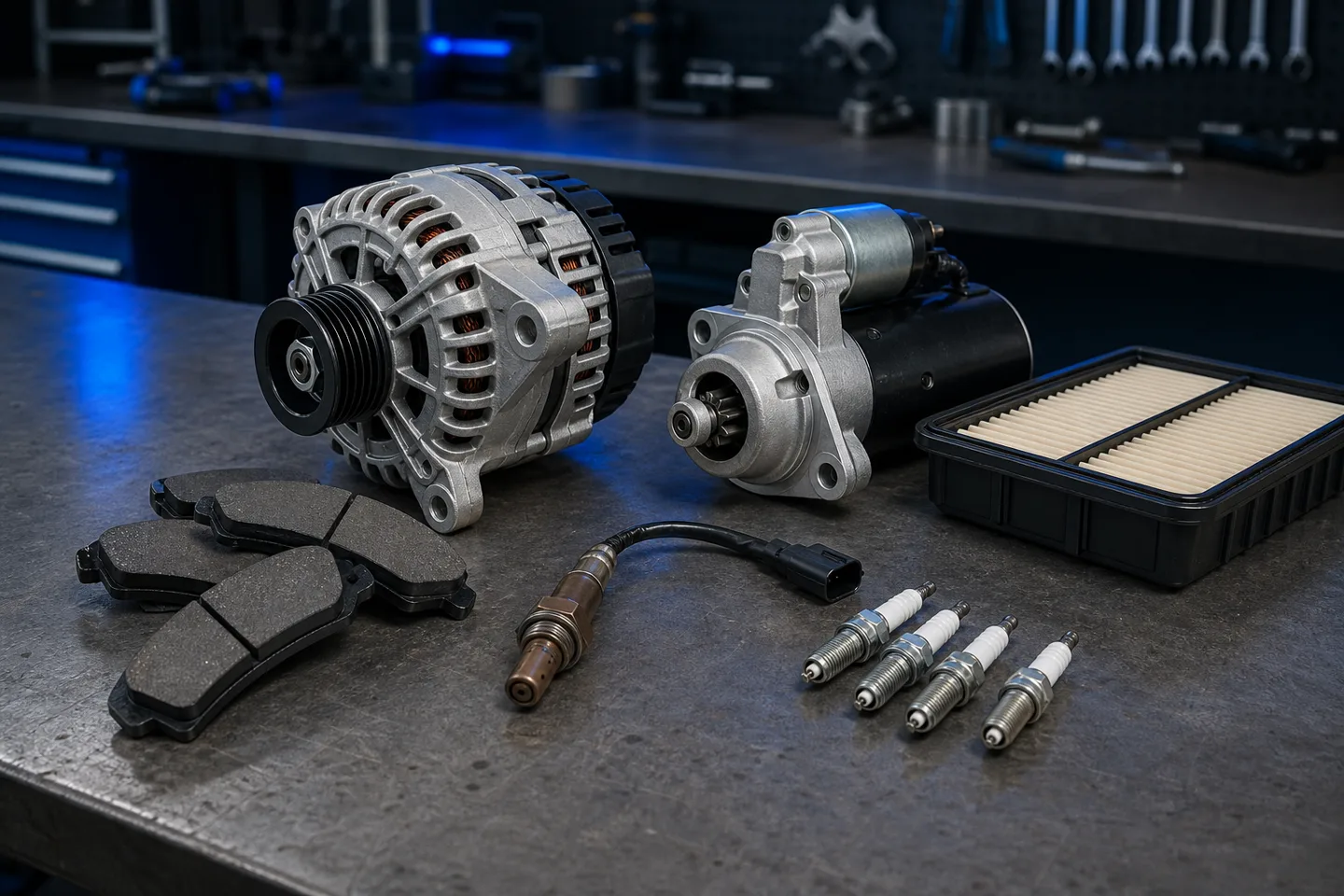
What OEM actually means
An OEM-branded service part is sold through the vehicle manufacturer’s parts channel. It is intended to meet the manufacturer’s specification for a particular application. The company that physically produced the original factory part may also sell a similar part under its own brand, but the packaging, revision, included hardware, and warranty can differ.
OEM is attractive when a catalog has complicated option splits, the vehicle is under a manufacturer warranty, or the component needs factory calibration. It can also reduce uncertainty when a repair is difficult to access and the cost of repeating the labor is high.
What aftermarket includes
Aftermarket covers a broad range: established suppliers that design to original specifications, performance specialists, economy lines, private-label products, and unbranded parts. Treating all of them as one quality level is misleading. Compare the exact manufacturer, product line, certification where relevant, warranty administrator, and seller.
Some aftermarket products intentionally differ from the factory design. A suspension component may use a firmer bushing, a replacement manifold may address a cracking pattern, or a brake pad may trade dust for noise or cold response. A design change can be useful, but it should match the driver’s priorities and the rest of the system.
When OEM is often worth considering
Electronic modules, networked sensors, camera and radar hardware, restraint components, emissions devices, and parts requiring software setup are strong candidates for manufacturer guidance. The same applies when a technical service bulletin specifies a revised part number or a repair depends on an exact calibration.
OEM can also make sense for molded trim, weather seals, interior switches, and brackets where small dimensional differences are visible or cause noise. The value is not only durability; it is avoiding hours spent modifying a part that was supposed to fit directly.
When aftermarket can be the better value
Common service items such as filters, belts, lighting, brake friction, chassis parts, and rotating electrical components often have several credible aftermarket choices. Established manufacturers may supply clear application data, technical support, and warranties that compete well with the vehicle brand.
Compare product tiers within a brand. An economy line built for an older commuter is not the same proposition as that company’s premium or severe-duty line. Choose for the expected ownership period, annual mileage, climate, load, and installation cost instead of buying by brand name alone.
Warranty and recordkeeping
Read what the warranty actually pays. Many replacement-part warranties cover the component but not diagnosis, labor, towing, fluids, programming, or damage to other parts. Confirm who handles a claim and whether you must ship the failed item back before receiving a replacement.
The FTC explains that a vehicle manufacturer generally cannot require a specific brand of paid part or service merely to keep warranty coverage. A manufacturer may deny coverage for damage it can show was caused by a defective part or improper installation. Keep receipts, catalog screenshots, maintenance records, and installation documentation.
Before you order
- Compare exact product lines, not only OEM versus aftermarket labels.
- Price the included seals, bolts, clips, fluids, and programming.
- Consider the labor cost and risk of repeating the repair.
- Read exclusions and the claims process before purchasing.
- Keep the receipt, warranty, fitment evidence, and installation record.
Primary references
These public sources support the vehicle-identification, safety, warranty, or consumer-rights context used in this guide.